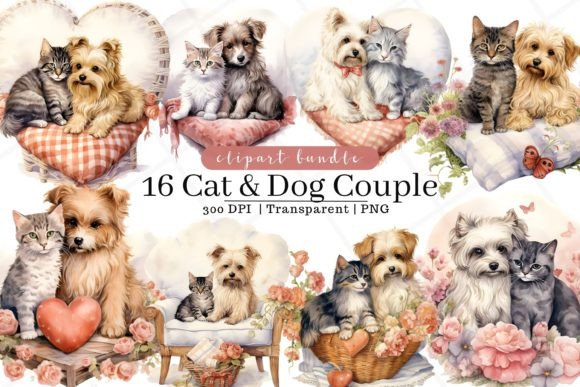
Cat and Dog Couple Watercolor Illustrations for Editorial Use
As a blog designer who has managed visual assets for dozens of content websites, my first impression of the Cat and Dog Couple Watercolor Clipart is that it strikes a difficult balance between whimsy and professional polish. In the realm of editorial design, pet-themed graphics often veer too far into cartoonish territory, alienating adult readers or making a site feel juvenile. However, this specific graphic design asset maintains a sophisticated watercolor texture that signals warmth without sacrificing credibility. It immediately establishes a lifestyle-focused, gentle, and approachable mood that is essential for niches like pet care, family blogging, and cozy home aesthetics. For publishers, this means the asset does not just fill white space; it actively communicates a brand identity rooted in comfort and companionship.
Establishing Visual Hierarchy in Pet Lifestyle Content
When integrating these illustrations into a real publishing workflow, the primary value lies in their ability to soften rigid web design structures while maintaining clear visual hierarchy. Modern design relies heavily on negative space, and the organic edges of watercolor art naturally guide the eye without creating harsh borders. I tested this asset as a website header element alongside sans-serif typography, and the contrast created an immediate focal point that felt intentional rather than decorative. For content marketing strategies, this distinction is vital. Readers scan pages quickly, and the soft, recognizable silhouettes of the cat and dog couple act as visual anchors that slow the scroll rate just enough to increase engagement with the headline text.
The versatility of this clipart extends beyond simple decoration. In my experience designing category thumbnails for affiliate marketing blogs, consistency is often the biggest hurdle. Using this cohesive set allows for a unified look across different posts while keeping the imagery fresh. Whether used for a "Pet Nutrition" guide or a "Cozy Home Decor" roundup, the underlying artistic style ties disparate topics together under one strong brand identity. This level of visual cohesion builds reader trust over time, signaling that the publication is curated and professional rather than haphazardly assembled from random stock photos.
Real-World Applications for Digital Publishers
In a practical production environment, the Cat and Dog Couple Watercolor Clipart serves multiple distinct functions across the content ecosystem. When preparing Pinterest pin templates, the vertical composition of watercolor elements leaves ample room for bold, readable text overlays, which is critical for click-through performance. Unlike complex photographs that can clash with text, these illustrations provide a textured background that enhances legibility. Similarly, for newsletter creators, using this asset in email headers can significantly improve open rates by adding a personal, handcrafted touch that stands out in crowded inboxes.
- Lead Magnets and Digital Guides: The artwork translates beautifully to eBook covers and worksheet designs, adding perceived value to free downloads.
- Social Media Graphics: Ideal for Instagram stories and Facebook posts where authentic, non-corporate visuals drive higher interaction.
- Printable Design Products: High-resolution files make this suitable for commercial design products like planners, greeting cards, and wall art.
- Affiliate Content Visuals: Softens the sales-heavy nature of product review posts, making recommendations feel more like friendly advice.
- Canva Template Creation: Serves as a foundational element for reusable blog graphics templates, streamlining future content creation.
Optimizing for Click-Throughs and Reader Trust
Performance in digital publishing is not just about aesthetics; it is about conversion. I have found that watercolor illustrations often outperform generic vector art in lifestyle niches because they evoke emotion. Emotion drives clicks. When used as a featured image accent, the Cat and Dog Couple Watercolor Clipart suggests a narrative of harmony and domestic bliss. This subtle storytelling supports the written content, priming the reader to be receptive to the message. For small business branding, this emotional connection is a tangible asset. It transforms a standard informational article into an experience, fostering a deeper relationship between the publisher and the audience.
Furthermore, this asset supports better category recognition. Regular readers begin to associate specific visual styles with specific types of content. By consistently applying these illustrations to pet-related or family-oriented posts, you create a visual shorthand. A returning visitor knows exactly what kind of content to expect before reading a single word. This reduces cognitive load and improves user experience, which are key factors in both SEO rankings and long-term audience retention. The asset effectively bridges the gap between creative design and functional UX strategy.
Strategic Placement and Usage Limitations
While versatile, this graphic design asset requires strategic placement to remain effective. It excels in hero images, article thumbnails, and editorial accents where its delicate details can be appreciated. However, publishers must exercise caution when using it in high-density layouts. Because watercolor relies on subtle color gradients and soft lines, it can lose definition when scaled down to very small mobile thumbnails or placed against busy, low-contrast backgrounds. In my testing, the clipart performed poorly when overlaid directly onto dark photography without a solid backing layer. It demands breathing room to function as a premium design element.
Additionally, context matters immensely. This asset is perfect for feminine, educational, seasonal, or artistic niches, but it may undermine authority in strictly corporate, legal, or financial contexts. If your website aims for a stark, minimalist, or hyper-modern tech aesthetic, the traditional nature of watercolor might create visual dissonance. Always evaluate whether the mood of the illustration aligns with the intent of the specific page. A mismatch between visual tone and content voice can confuse readers and dilute your brand messaging, regardless of how beautiful the individual asset is.
Publisher Workflow Notes and Technical Checks
Before deploying the Cat and Dog Couple Watercolor Clipart on a live site, run through a rigorous technical checklist. First, verify the commercial license terms explicitly. If you plan to use these in paid digital products, lead magnets, or on monetized affiliate pages, ensure your license covers commercial design usage. Next, test file sizes. Watercolor textures can result in large PNG files that hurt page load speeds. Always compress images properly using modern formats like WebP where possible to maintain quality without sacrificing web performance. Speed is a ranking factor, and heavy graphics should never compromise it.
- Typography Pairing Test: Preview the clipart beside your site’s primary serif, sans-serif, and script fonts. Ensure the organic shapes complement rather than compete with your typeface choices.
- Contrast Verification: Check accessibility standards if placing text near or over the illustration. The soft colors may require a darker text weight or a subtle drop shadow for readability.
- Mobile Responsiveness: View the asset on actual devices, not just browser resizing tools. Ensure details remain visible and the composition doesn't crop awkwardly on narrow screens.
- Grayscale Check: Convert the image to black and white to see if it still holds up structurally. This ensures the design remains effective for printables or users with visual impairments.
- Brand Consistency Audit: Compare the new asset against existing blog graphics. Does it elevate the current standard or deviate too far? Adjust opacity or color grading if necessary to match your established palette.
Ultimately, the Cat and Dog Couple Watercolor Clipart is a high-value addition to any digital publisher's toolkit, provided it is applied with intention. It offers a rare combination of artistic charm and functional versatility that can elevate everything from social media graphics to comprehensive digital guides. By treating this asset as a core component of your visual communication strategy rather than mere decoration, you can create a more polished, clickable, and trustworthy content experience that resonates deeply with your target audience.