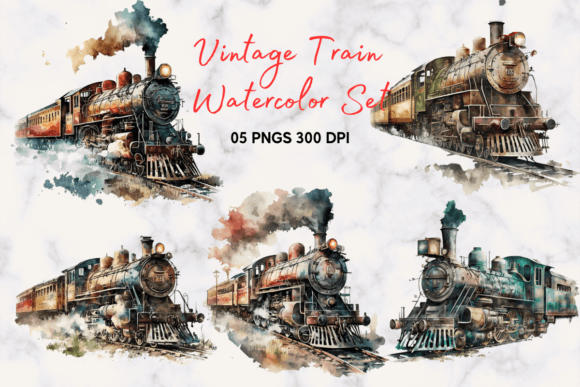
Vintage Train Watercolor Clipart: Illustrations for Crafters
As a handmade business owner who has spent countless hours testing digital assets for real-world production, my first impression of this Vintage Train Watercolor Clipart was one of immediate nostalgia mixed with practical curiosity. When you run an Etsy shop or prepare for a local craft fair, you learn quickly that not every pretty image translates to a sellable product. However, these illustrations strike a specific balance between whimsical charm and commercial viability. The mood is distinctly cozy and heritage-inspired, evoking feelings of classic storybooks, holiday traditions, and gentle masculinity. This isn't a neon, high-energy graphic; it is a soft, textured asset that appeals to customers looking for nursery decor, vintage-style party supplies, or heirloom-quality gifts. For creative entrepreneurs, this clipart suggests a premium, artisanal aesthetic rather than a mass-produced feel, which is exactly what buyers in the handmade marketplace are currently seeking.
Real-World Applications for Sublimation and Printables
In my own workflow, I evaluated this graphic design asset specifically for sublimation design and printable products, as watercolor textures shine brightest when printed rather than cut. For tumbler wraps and mug designs, the soft edges of the vintage train illustration allow for seamless blending into background colors or other elements like plaid patterns or wood textures. Unlike harsh vector lines, the watercolor bleed creates a natural transition that looks professional on curved surfaces. I found this asset particularly effective for creating cohesive seasonal collections. For example, pairing the train with holly or pine branches transforms it into a Christmas card design, while adding spring florals shifts it toward an Easter or baby shower theme.
For those focusing on digital products, this clipart serves as an excellent foundation for printable wall art and planner stickers. The resolution holds up well when scaled for 8x10 prints, maintaining the integrity of the brush strokes without pixelation. As a sticker design element, it works beautifully for junk journals and scrapbooking kits where the "imperfect" nature of watercolor adds value. If you are running a print-on-demand business, this illustration style tests well on tote bags and apparel because the muted tones tend to print more accurately on fabric than highly saturated RGB colors, reducing customer complaints about color discrepancies.
Navigating Cricut and Silhouette Projects with Watercolor
Crafters using cutting machines need to approach this Vintage Train Watercolor Clipart differently than those using printers. While the PNG design is stunning for print-then-cut features on both Cricut and Silhouette machines, pure vinyl cutting requires caution. Watercolor illustrations often have soft, semi-transparent edges that do not translate into clean cut paths. If your goal is to create layered vinyl decals for shirts or signs, you must verify if the seller provides a dedicated SVG design with simplified, solid outlines. Without a clean vector version, your machine may struggle to detect the cut line, resulting in jagged edges or incomplete cuts through the delicate details of the train wheels and smokestack.
However, for hybrid projects, this asset is a goldmine. I successfully used it for a batch of custom gift tags where I printed the watercolor train onto cardstock and then used my Cricut to cut a simple tag shape around it. This method preserves the artistic detail of the illustration while utilizing the precision of the cutting machine for the silhouette. This workflow is ideal for small business branding, allowing you to create high-end packaging accents without the frustration of trying to weed intricate watercolor vinyl. Always remember to use the registration marks correctly in your software to ensure the print aligns perfectly with the cut line.
Where This Asset Shines and Where to Proceed with Caution
Through testing, I identified specific scenarios where this Vintage Train Watercolor Clipart performs exceptionally well and areas where it requires modification. It excels in large-format applications such as t-shirt designs for toddlers, nursery canvas prints, and decorative accents on wooden signs. The texture is visible and intentional at these sizes, adding depth that flat vectors cannot achieve. It is also perfect for product mockups; placing this illustration on a realistic blank mug or shirt mockup helps customers visualize the final handmade product, increasing conversion rates in your creative marketplace listings.
Conversely, use this asset carefully for very small applications. At sizes under two inches, the subtle watercolor gradients can muddy together, making the train look undefined. This is critical for planner stickers or detailed cake toppers. Additionally, avoid using this illustration on dark-colored materials unless it has a solid white background or outline. Watercolor is inherently translucent; placing it directly on black vinyl or dark fabric will cause the image to disappear or look washed out. For dark backgrounds, you must edit the file to add opacity or a backing layer, which adds an extra step to your crafting workflow. Crowded compositions are another risk; because watercolor is busy by nature, surrounding the train with too many other detailed elements can make the design look chaotic rather than curated.
Essential Technical Checks for Handmade Business Owners
Before listing any finished product made with this clipart, there are several non-negotiable technical checks every maker must perform. First, confirm the commercial license terms. Just because an asset is available in a design bundle does not automatically grant unlimited commercial rights for physical products or digital redistribution. Protect your handmade business by reading the fine print regarding print-on-demand usage and end-product limits. Second, test your colors. Screen displays are backlit and vibrant, while ink on paper or fabric is reflective and often duller. Print a test swatch on your actual substrate to ensure the vintage hues remain warm and appealing, not gray or muddy.
- Verify Transparency: Open the PNG design in your editing software to ensure the background is truly transparent. Some clipart files have white backgrounds disguised as transparency, which ruins the look on colored products.
- Check Resolution: For sublimation design and large prints, ensure the file is at least 300 DPI at the intended print size. Upscaling a low-res file results in blurry, unprofessional merchandise.
- Font Pairing: Test typography before production. This vintage illustration pairs best with classic serif fonts or flowing handwritten scripts. Avoid modern, geometric sans-serif fonts as they can clash with the organic, nostalgic feel of the watercolor.
- Simplify for Cutting: If using for print-then-cut, simplify the cut path in your software. Remove internal details from the cut line to prevent the blade from making unnecessary passes through the paper or vinyl.
- Mockup Testing: Always place the design on a realistic product mockup before launching. What looks good flat may look disproportionate on a curved tumbler wrap or a gathered tote bag.
Ultimately, this Vintage Train Watercolor Clipart is a versatile tool for the prepared crafter. It offers a unique alternative to the oversaturated market of cartoon trains, providing a sophisticated option for makers targeting a niche audience. Whether you are designing for a holiday craft fair, updating your Etsy shop with new nursery decor, or creating personalized gifts, this illustration brings a warmth that resonates with buyers. By respecting the technical limitations of watercolor in a digital space and leveraging its strengths in print and hybrid media, you can transform this graphic design asset into a profitable pillar of your small business branding. Remember, the success of any digital product lies not just in the beauty of the art, but in the intentionality of its application.