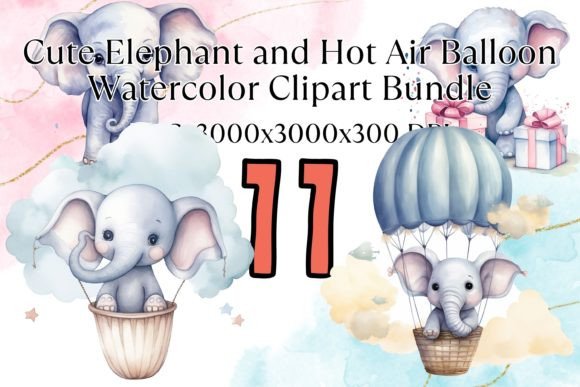
Baby Elephant Hot Air Balloon Watercolor Illustrations
Evaluating Whimsy for a Nursery Brand Identity Project
When sourcing assets for a recent client rebranding a boutique nursery line, I needed more than just cute clipart; I required a graphic design asset that could anchor an entire visual identity. My first impression of the Baby Elephant Hot Air Balloon Watercolor was that it strikes a delicate balance between playful nostalgia and modern softness. The watercolor texture feels organic rather than digitally manufactured, which is crucial for establishing trust with parents seeking authentic, handmade business aesthetics. Unlike generic vector art, this illustration carries emotional weight through its brushwork and color blending. For a designer, this immediate sense of warmth suggests the asset is primed for projects requiring high emotional engagement, such as birth announcements, children’s book covers, or artisanal product packaging.
In the context of my client project, this piece served as the hero element for a new seasonal collection. The visual mood is gentle and dreamlike, making it an ideal candidate for brands targeting millennial parents who value aesthetic cohesion over loud, primary colors. It does not scream for attention but rather invites the viewer into a narrative. This subtlety is what separates professional creative design from amateur crafting; the asset supports the brand story without overpowering the typography or product photography.
Performance Across Print-on-Demand and Digital Channels
A versatile digital product must perform across multiple touchpoints, and I tested this Baby Elephant Hot Air Balloon Watercolor in various real-world scenarios. For print-on-demand sellers and Etsy product creators, the resolution and edge quality are paramount. In t-shirt design and sublimation design applications, the watercolor edges retained their softness without pixelating or creating harsh halos against fabric textures. This makes it exceptionally strong for apparel where a "sticker-like" appearance would cheapen the perceived value.
For social media graphics and Pinterest pins, the composition offers excellent negative space. The balloon element naturally draws the eye upward, allowing designers to place headlines or promotional text in the surrounding area without fighting for visual hierarchy. When adapted for Canva template use, the asset scales well, maintaining its integrity whether used as a full-frame background or a subtle corner accent. However, for Cricut project users, caution is necessary. While the PNG design is beautiful, intricate watercolor gradients can be challenging for vinyl cutting. This asset shines brightest in inkjet printing, sticker design, and digital web design rather than layered vinyl applications where solid shapes are preferred.
Optimal Placement in Packaging and Editorial Design
During the packaging design phase for baby skincare products, I found this illustration works best as a focal point on labels and box sleeves. The organic nature of the watercolor complements matte paper stocks and uncoated finishes, reinforcing a natural brand identity. In editorial design, such as blog headers or magazine spreads, it functions effectively as a spot illustration to break up dense text. The whimsical character adds personality to informational content about parenting or child development, making the material feel more approachable and less clinical.
For commercial design assets intended for marketing visuals, the elephant and balloon motif serves as a consistent thread across campaigns. I successfully utilized it on tote bags, mugs, and printable wall art, proving its viability as a core component of a larger design bundle. The key to its success lies in its ability to evoke a specific feeling—safety, adventure, and tenderness—that resonates deeply with the target demographic.
Navigating Visual Hierarchy and Layout Constraints
While charming, this Baby Elephant Hot Air Balloon Watercolor requires thoughtful placement to maintain professional standards. It excels in large layout areas where the texture can be appreciated, but it struggles in small sizes. When reduced below two inches, the fine details of the watercolor bleed together, losing definition and potentially looking muddy. Designers should avoid using this asset in complex, crowded layouts or alongside high-contrast geometric patterns, as the soft edges will clash with hard lines, creating visual dissonance.
Furthermore, minimalist branding projects may find this illustration too ornate. If your client’s brand relies on stark, corporate cleanliness, this whimsical style might undermine the desired authority. It is also vital to consider readability; never place body text directly over the darker watercolor washes of the elephant or balloon basket. Instead, use the asset to frame content or create a visual anchor that guides the viewer’s eye toward the copy. Maintaining this discipline ensures the design remains accessible and commercially viable.
Technical Pre-Flight Checks for Commercial Use
Before committing this asset to a final deliverable, I always run a series of practical tests to ensure quality and legal compliance. First, verify the commercial license terms. Just because an asset is available on a creative marketplace does not mean it permits unlimited print-on-demand sales or logo trademarking. Clarifying usage rights protects both the designer and the client from future disputes.
- Contrast Testing: Preview the illustration on both white and dark backgrounds. Watercolors often rely on the white of the paper for highlights; on dark backgrounds, you may need to adjust blending modes or add a subtle glow to preserve detail.
- Grayscale Conversion: Test the asset in black and white. A strong illustration should retain its form and recognizability without color. If it turns into an indistinct blob in grayscale, it may fail in single-color printing scenarios like embossing or newspaper ads.
- Typography Pairing: Experiment with different font styles. This watercolor pairs beautifully with rounded sans serif fonts and delicate scripts but can look disjointed with rigid, industrial typefaces. Ensure the font choice matches the softness of the illustration.
- File Integrity: Inspect the PNG transparency carefully. Jagged edges or leftover artifacts around the subject indicate poor extraction. For professional work, clean up any stray pixels before placing the file in production software.
- Mockup Validation: Never approve a design based on screen view alone. Place the asset on realistic product mockups to see how the colors interact with physical materials. Screen brightness often deceives; printed watercolors can appear duller, so color correction may be necessary.
Final Verdict for Small Business Branding
Ultimately, the Baby Elephant Hot Air Balloon Watercolor is a robust addition to a designer’s toolkit, specifically for clients in the maternal, juvenile, and artisanal sectors. Its strength lies in its ability to humanize a brand and create instant emotional connection. For small business branding, it offers a cost-effective alternative to custom illustration while still providing a unique, polished look that elevates merchandise and marketing collateral above generic competitors.
However, professionalism dictates restraint. Use this asset to enhance a concept, not to carry a weak strategy. When applied with intentionality—respecting scale, contrast, and audience expectations—it transforms from a simple clipart file into a powerful vehicle for storytelling. Whether you are designing a nursery website, a line of greeting cards, or a social media campaign for a local event, this illustration provides the tender, imaginative touch that turns casual viewers into loyal customers. By treating this digital asset with the same rigor as bespoke artwork, designers can deliver results that are both visually enchanting and commercially sound.